

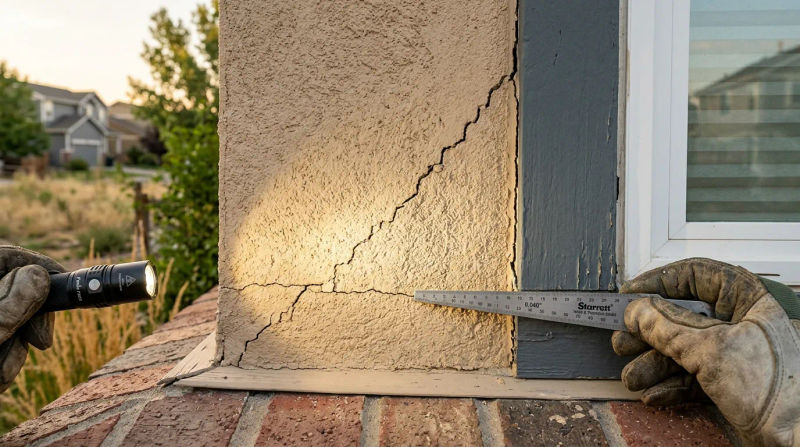
In my line of work with production and live events, my whole job revolves around planning for the unexpected and paying obsessive attention to the details. My team and I spend weeks mapping out every cable, every light, and every potential point of failure. That mindset has trained my eye to spot the little things that can become big problems. It’s a habit I can’t seem to turn off, even when I’m home in Thornton. The other evening, enjoying that perfect July temperature drop after a hot day, I noticed it: a fine, web-like crack spreading across a neighbor’s stucco wall, glinting in the last light of the day. It’s a sight that’s becoming more common across the Front Range, and it’s a direct result of our unique Colorado climate.
That beautiful, dramatic temperature swing we love - from 90 degrees in the afternoon sun to a cool 55 degrees at night - puts incredible stress on the exterior of our homes. This phenomenon leads to what are known as thermal shock cracks, and they are something every homeowner here should be aware of.
Common Signs and Symptoms
Knowing what to look for is the first step in protecting your home. I always tell my team that a good site walk is critical, and the same applies to your own property. Take a slow walk around your home’s exterior, paying close attention to the south and west-facing walls, as they bear the brunt of the afternoon sun. Bring a credit card with you as a simple measuring tool.
Here’s what you should be looking for:
- On Stucco: This is one of the most common places to see issues. Look for fine, hairline cracks that can look like a spiderweb. You might also see longer, more defined vertical or horizontal cracks, often originating from the corners of windows and doors. These are classic signs of thermal expansion cracks stucco Thornton homeowners frequently encounter. If the stucco feels soft, sounds hollow when you tap it, or has a chalky residue, it could indicate water has already gotten behind it.
- On Masonry (Brick & Stone): Check the mortar joints between your bricks or stones. The most common pattern you’ll see is a “stair-step” crack that follows the path of least resistance along the mortar lines. While less common, a vertical crack that runs straight through the bricks themselves is a more serious sign that warrants immediate attention.
- On Wood Trim and Siding: Your home’s paint is its first line of defense. Look for paint that is cracking, blistering, or peeling away from the wood. Pay special attention to the joints where two pieces of trim meet or where trim meets the siding. You might see gaps opening up. Check the caulking around windows, doors, and vents. If it’s dried out, brittle, and cracked, it’s no longer creating a waterproof seal.
What Causes This Problem
Understanding the “why” behind these cracks is key. The root cause is a simple law of physics: thermal expansion and contraction. When materials get hot, they expand. When they cool down, they contract. Our intense Colorado sun can heat the surface of a wall to well over 100 degrees, causing it to swell on a microscopic level. Then, as the sun sets and the cool mountain air rolls in, the surface temperature can plummet by 40 degrees or more in just a few hours. This rapid contraction is the “shock” in thermal shock cracks.
Think of it like bending a paperclip back and forth. The first few times, nothing happens. But with enough repetition, the metal fatigues and eventually snaps. The day night temperature swing home damage Colorado experiences is that same repetitive stress on your house. Every single day, your home’s exterior is expanding and contracting.
To make matters more complex, different materials expand and contract at different rates. The stucco, the wood trim, the glass in the window, and the metal flashing all move at their own pace. This differential movement creates immense stress at the points where these materials meet, which is why we so often see cracks starting at the corners of windows and doors. Over years of this daily cycle, the materials fatigue, and a crack is born.
When to Call a Professional
Once you’ve identified a crack, the next question is always: “Is this a big deal?” This is where knowing how to tell if exterior cracks need repair is crucial. Some minor issues can be monitored, but others require immediate action to prevent water intrusion and more significant damage down the road.
Here’s a simple guide to help you decide:
Consider Monitoring or a Small DIY Fix If:
- The crack is purely cosmetic, like a hairline crack in a top layer of paint that doesn’t go through to the material underneath.
- The crack is smaller than the width of a credit card (less than 1/16th of an inch) and doesn't appear to be growing.
- A small bead of caulk around a window has a minor split. This can often be scraped out and replaced with a high-quality, flexible sealant.
You Should Call a Professional For an Assessment If:
- The Crack is Wider Than a Credit Card: This is a clear sign that the gap is significant enough to allow water entry.
- The Crack is Getting Longer or Wider: If you notice a crack changing over the course of a few weeks or months, it indicates an active problem that won't fix itself.
- You See Stair-Step Cracks in Masonry: This can sometimes point to foundation movement or settling, and it’s essential to have an expert diagnose the root cause.
- Water is Getting In: If you see water stains on your interior drywall or ceiling near the location of an exterior crack, you have an active leak that needs to be addressed immediately.
- The Stucco is Damaged: If the stucco around the crack is bulging, soft, or crumbling, it means the underlying structure is compromised and a simple patch job won't be enough.
An experienced professional won't just slap some filler in the crack. My team and I know that proper prep is everything. A pro will diagnose the underlying cause, determine if there's a deeper structural or moisture issue, and use the correct materials and techniques to create a durable, flexible repair that can withstand our local climate's demands.
Conclusion
Living in Thornton means we get to enjoy incredible weather, but that same weather asks a lot from our homes. The intense sun and dramatic temperature swings are constantly testing your home's exterior. Those small cracks you see today are more than just a cosmetic issue; they are potential entry points for water, especially with late-summer storms on the horizon. What starts as a tiny thermal shock crack can lead to wood rot, mold, and significant structural damage if left unaddressed.
Taking a few minutes this weekend to inspect your home's exterior is one of the smartest investments you can make. Catching these issues early is far less disruptive and expensive than dealing with the consequences of water damage later. Don't wait for a small problem to become a big headache.
If you notice any of these signs, contact a local General Contractor professional for an inspection.