

From my perspective in production and event planning, success is all about managing the details before they become problems. A flawless live stream depends on checking every cable, and a smooth event relies on a solid logistical plan. It’s the same with our homes. You might be sitting on your patio this July, enjoying the intense Colorado sun, and notice something feels off - maybe a faint, smoky smell indoors even though the windows are shut, or an unusual number of ants marching along your window sill. These aren't just minor annoyances; they're often the first whispers of a bigger issue: exterior caulk failure.
Here in Thornton, our homes take a beating from the environment. The high-elevation sun, dramatic temperature swings, and dry air create a perfect storm for breaking down the sealants that protect your home's outer shell. As a planner, I see this as a critical pre-production check for your home. July is the ideal time to do a thorough walk-around and inspect these crucial seals before the late summer monsoon storms arrive, and before wildfire season is in full swing. Let's walk through the key signs my team and I look for when assessing a property, treating it just like a site survey before a big event.
Common Signs and Symptoms
Think of this as your summer sealant failure checklist. Grab a notepad and take a slow walk around the exterior of your home. Pay close attention to windows, doors, trim boards, and where different siding materials meet. These are the joints that rely on flexible sealant to keep the elements out.
Here are the seven key signs of trouble:
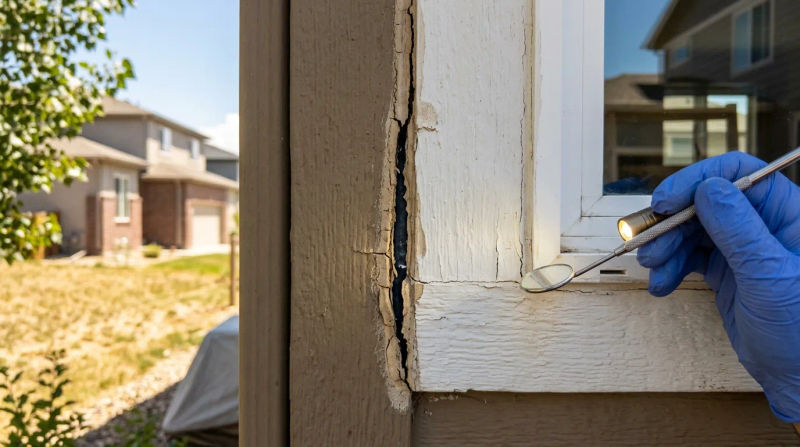
- 1. Visible Cracking and Fissures: This is one of the most obvious Colorado UV caulk damage signs. Look closely at the bead of caulk. Do you see tiny, web-like cracks on the surface? Or are there deep fissures that run the length of the sealant? Healthy caulk should be smooth and uniform. Cracks are a sign that the caulk has lost its flexibility and is becoming brittle.
- 2. Gaps and Shrinkage: Does the caulk appear to be pulling away from the trim or siding? You might see a distinct, dark gap between the sealant and the surface it's supposed to be bonded to. These gaps are direct entry points for moisture, drafts, and pests. This is especially critical around windows and doors, as these window trim gaps smoke intrusion pathways can allow smoke and ash from distant wildfires to seep into your home, affecting your indoor air quality.
- 3. Hardening and Brittleness: Gently press on the caulk with your fingernail (in an inconspicuous spot). It should have a slight give, feeling firm but flexible like rubber. If it’s rock-hard and you can’t make an indent, it has lost its elasticity and is no longer able to expand and contract with your home. A brittle sealant will crack under pressure.
- 4. Peeling and Flaking: In advanced stages of failure, you'll see the caulk physically peeling away from the joint in strips or curling up at the edges. Sometimes it looks like old, peeling paint. This indicates a total loss of adhesion, leaving the joint completely exposed.
- 5. Evidence of Moisture: Look for dark stains, water streaks, or even mold and mildew on the siding or trim directly below a sealed joint. This is a red flag that water is already getting behind the failed caulk and into your wall assembly. You might also notice bubbling or peeling paint near these areas.
- 6. Unexplained Drafts or Energy Spikes: Is your air conditioner working overtime this summer? If you feel drafts around windows or exterior-facing outlets, it could be due to failed seals on the outside. Your home’s exterior envelope acts as a barrier, and when it's breached, your HVAC system has to work much harder to maintain a comfortable indoor temperature.
- 7. Increased Pest Activity: If you're suddenly seeing more ants, spiders, or other insects inside your home, check the exterior for their entry points. Those tiny gaps from shrinking caulk are superhighways for pests looking for shelter and food.
What Causes This Problem
Understanding why sealants fail helps you appreciate how harsh our local Thornton climate can be on a home. It’s not just about age; it’s about a constant environmental assault.
First and foremost is our intense sun. The Front Range's high elevation means we get a more potent dose of ultraviolet (UV) radiation. UV rays are incredibly effective at breaking down the chemical polymers that give caulk its flexibility and durability. Over time, this constant solar bombardment essentially cooks the sealant, turning it from a pliable barrier into a cracked, useless filler. This is the primary driver behind Colorado UV caulk damage signs.
Next are the dramatic temperature swings. It’s not uncommon for temperatures to swing 30 degrees or more from day to night. This causes the various materials of your home - wood trim, fiber cement siding, vinyl windows - to expand in the heat and contract in the cool. The caulk in the joints between them is forced to stretch and compress constantly. When it becomes brittle from UV damage, it can no longer handle this movement and simply cracks under the strain.
Finally, the original installation plays a huge role. If the previous applicator used a low-quality, cheap caulk, didn't properly clean the joint before application, or applied it in the wrong weather conditions, its lifespan was doomed from the start. A professional application involves meticulous preparation, just like setting up for a major event, to ensure the final product performs as expected.
When to Call a Professional
After your inspection, you might be wondering if this is a project you can tackle yourself. In my line of work, knowing when to delegate to a specialist is key to a successful outcome.
A DIY approach might be suitable if:
- The failure is limited to one or two small, easily accessible areas, like a first-floor window.
- You are comfortable with the multi-step process of completely removing the old caulk, cleaning the joint thoroughly, and applying a new bead correctly.
- You've done your research and are confident in choosing the right type of high-performance sealant for our climate.
It's time to call an experienced professional when:
- You see widespread exterior caulk failure across multiple areas of your home. A systemic problem requires a systemic solution.
- The work is on the second story or involves steep rooflines. Safety is paramount, and professionals have the right equipment and training for working at height.
- You see signs of water damage, like soft wood or interior staining. This suggests the problem may go deeper than just the caulk, and an expert needs to diagnose the extent of the damage.
- You want the peace of mind that comes with knowing the job was done right with the best materials, ensuring maximum protection for years to come.
Conclusion
Just like a production checklist ensures a show goes off without a hitch, your home maintenance checklist protects your biggest investment. This July, take the time to perform that crucial inspection of your home's exterior sealants. Look for the cracks, gaps, and brittleness that signal your home's first line of defense is weakening.
Acting early can prevent minor gaps from turning into major problems like water damage, pest infestations, and poor indoor air quality from smoke intrusion. It's a simple, proactive step that ensures your home is prepared for the storms and seasons ahead.
If you notice any of these signs, contact a local General Contractor professional for an inspection. They can provide an expert assessment and recommend the best course of action to re-seal and protect your home.